A clear windshield supports safe driving in all seasons. Canadian roads bring glare, winter sun, salt haze, and long night commutes. Driver guidance across Canada treats unobstructed visibility as a safety requirement. Simulator testing has shown that drivers using dirty or visually degraded windscreens crash about twice as often as those with clear glass, partly due to slower visual processing and fatigue.1 Regular interior glass cleaning improves clarity and helps defogging systems work more effectively.
Why Interior Windshield Film Matters In Canada
A thin film on the inside surface spreads light across your field of view. Headlights can look fuzzy, and streetlights can appear larger than they are. During winter, low sun angles make this effect stronger. Eye focus can drift toward the haze layer instead of the road scene ahead. That shift shortens hazard detection distance. Knowing how to clean the inside of the windshield properly helps maintain a sharper forward view.
Interior residue gives moisture more places to cling, which makes fog build up faster and slows down clearing when the defroster is on.2
What Builds Up On The Glass
Interior haze comes from several sources working together. Dashboard and trim materials release vapours over time. Heat and UV exposure speed up that process. These vapours settle on cooler glass and form a greasy layer.
Smoke and vaping residue leave sticky deposits that hold onto dust. Skin oils from fingerprints add more material. Winter driving adds fine salt and moisture residue that dries into faint spotting. Repeated condensation and evaporation cycles make the layer thicker if it is not removed.
What You Need Before You Start
- Two clean microfibre towels, one for wiping and one for buffing
- An ammonia-free glass cleaner or mild soap and water
- Isopropyl alcohol on a towel for smoke or oily film
- Gloves and open doors for airflow
- A small flashlight to spot streaks
How To Clean the Inside of a Windshield Without Streaks
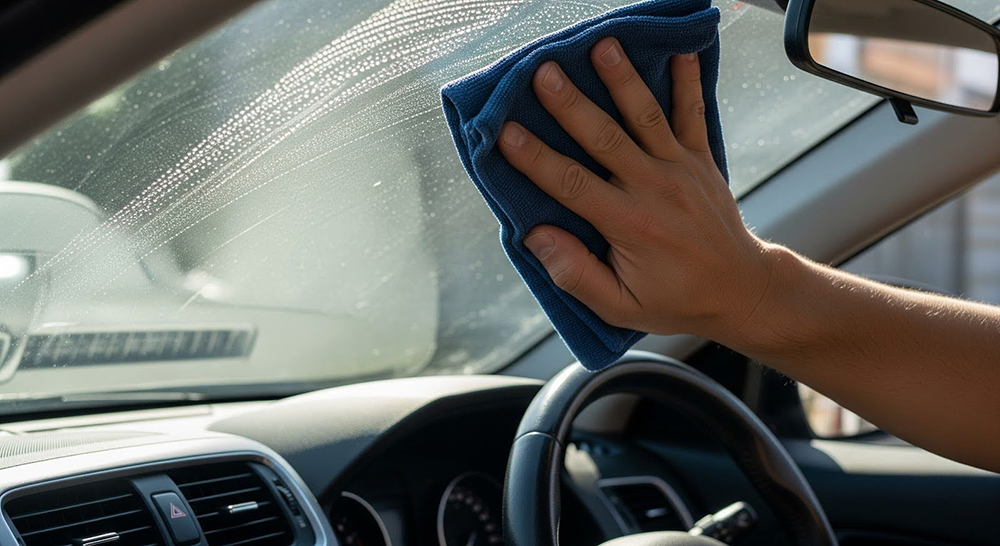
Park out of direct sun and give the glass time to cool. Begin with a dry microfibre pass to lift loose dust and grit. That step lowers the chance of fine scratches.
Spray cleaner onto your towel instead of the windshield. This approach keeps liquid away from dashboard seams and electronics. Work in small sections and wipe with steady pressure.
Use a second dry towel right away to buff the same section. The two-towel method lifts residue and removes leftover moisture before streaks form.
Finish the inside with vertical strokes. Use horizontal strokes on the outside surface. If a streak shows up later, the direction tells you which side needs another pass.
Cleaning Around Cameras And Sensors
Many vehicles place driver assist cameras near the top centre of the glass. These systems depend on a clear viewing area. Fog, oil film, or cleaner residue can interrupt their function.
Keep liquids controlled in this zone. Apply product to the cloth and wipe carefully around sensor housings. Do not touch exposed camera lenses. Avoid dripping cleaner near trim openings.
Cleaner Choices And When To Use Them
| Cleaner Option | Best For | What To Watch For |
| Ammonia-Free Glass Cleaner | Routine cleaning of the inside of the windshield film and prints | Put it on the towel first |
| Mild Soap And Water | Light dirt and maintenance wipes | Wring cloth well before use |
| Isopropyl Alcohol On Towel | Smoke and oily residue | Ventilate the cabin during use |
Do not mix household chemicals. Some combinations create dangerous gases. Use one product at a time and keep fresh air moving through the vehicle.
Mistakes That Make The Job Harder
- Using paper towels that shed lint onto the glass
- Scrubbing with abrasive pads that leave fine scratches
- Soaking the surface and letting the liquid run into the dashboard
- Working with doors closed while using solvents
- Cleaning very hot or very cold glass
When To Clean And What The Signs Look Like
Glare at night often gives the first warning. Headlights may show starburst patterns. Streetlights can look smeared. That points to interior buildup.
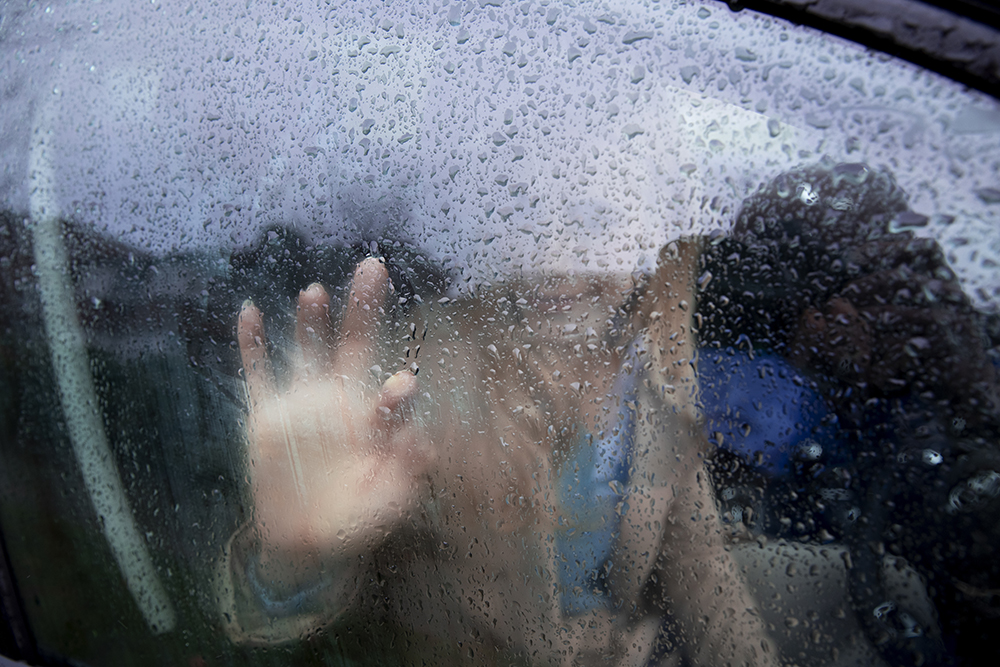
Fog that takes longer to clear also suggests residue on the surface. Moisture holds more easily on a contaminated windshield. If you want to clean car windows inside between deeper sessions, a dry microfibre wipe followed by a firm buff works well.
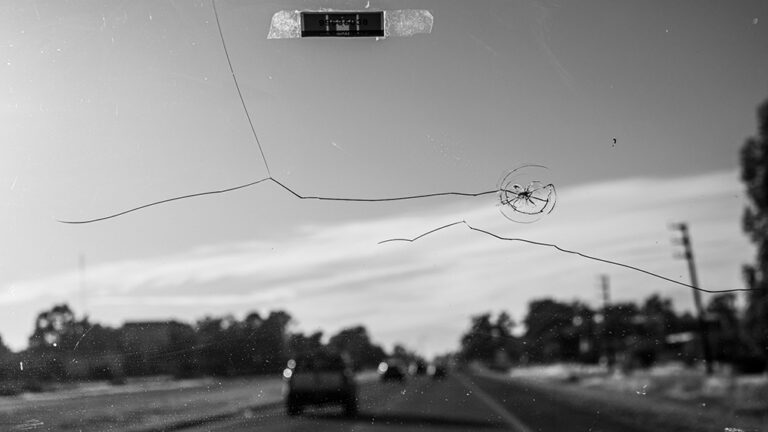
While wiping, check for chips or hairline cracks. Temperature swings can expand small defects. Early auto glass repair often keeps visibility problems from growing.
FAQs
How Do I Clean Car Windows Inside Without Lint Or Smears?
Use two clean microfibre towels instead of paper towels or shop rags. Put cleaner on the first towel, wipe the glass in small sections, then follow right away with a second dry towel to buff. Fold each towel into quarters and rotate to a fresh side as soon as it feels damp or dirty. If streaks keep showing, your towel is likely saturated with residue and needs replacing. Wash microfibre separately without fabric softener so it stays absorbent and lint-free.
What If I Notice A Crack While Cleaning?
Stop scrubbing that area and avoid pressing on the glass. Even light pressure can help a small crack spread, especially in cold weather or after the defroster runs. Check whether the line grows toward the edge or changes after a drive. If it does, book service soon since spreading cracks reduce visibility and can weaken the windshield. Many drivers choose to fix a cracked windshield once they spot active spreading.
How Often Should I Clean the Car Windshield Inside?
Monthly cleaning fits many driving patterns. Biweekly schedules help drivers who log high mileage, smoke, vape, or drive through heavy winter conditions. New vehicles often need more frequent wiping during the first months.
Final Step
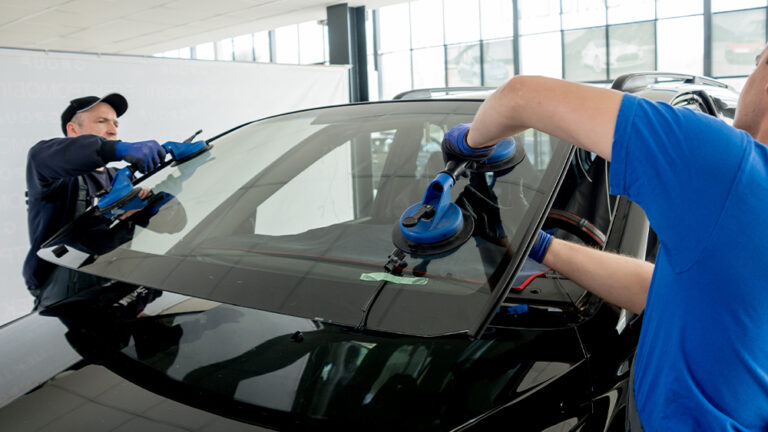
If haze or glare stays after you clean the car windshield inside and buff it well, the glass may have wear or cracking. Request a quote from Auto Glass Pro Etobicoke today!
References
- “A Study on Crashes Related to Visibility Obstruction Due to Fog and Smoke.” ResearchGate, www.researchgate.net/publication/51206008_A_study_on_crashes_related_to_visibility_obstruction_due_to_fog_and_smoke.
Canada, Natural Resources. “Condensation.” Natural Resources Canada, 16 Jan. 2025, natural-resources.canada.ca/energy-efficiency/product-energy-ratings/condensation.
You May Also Like